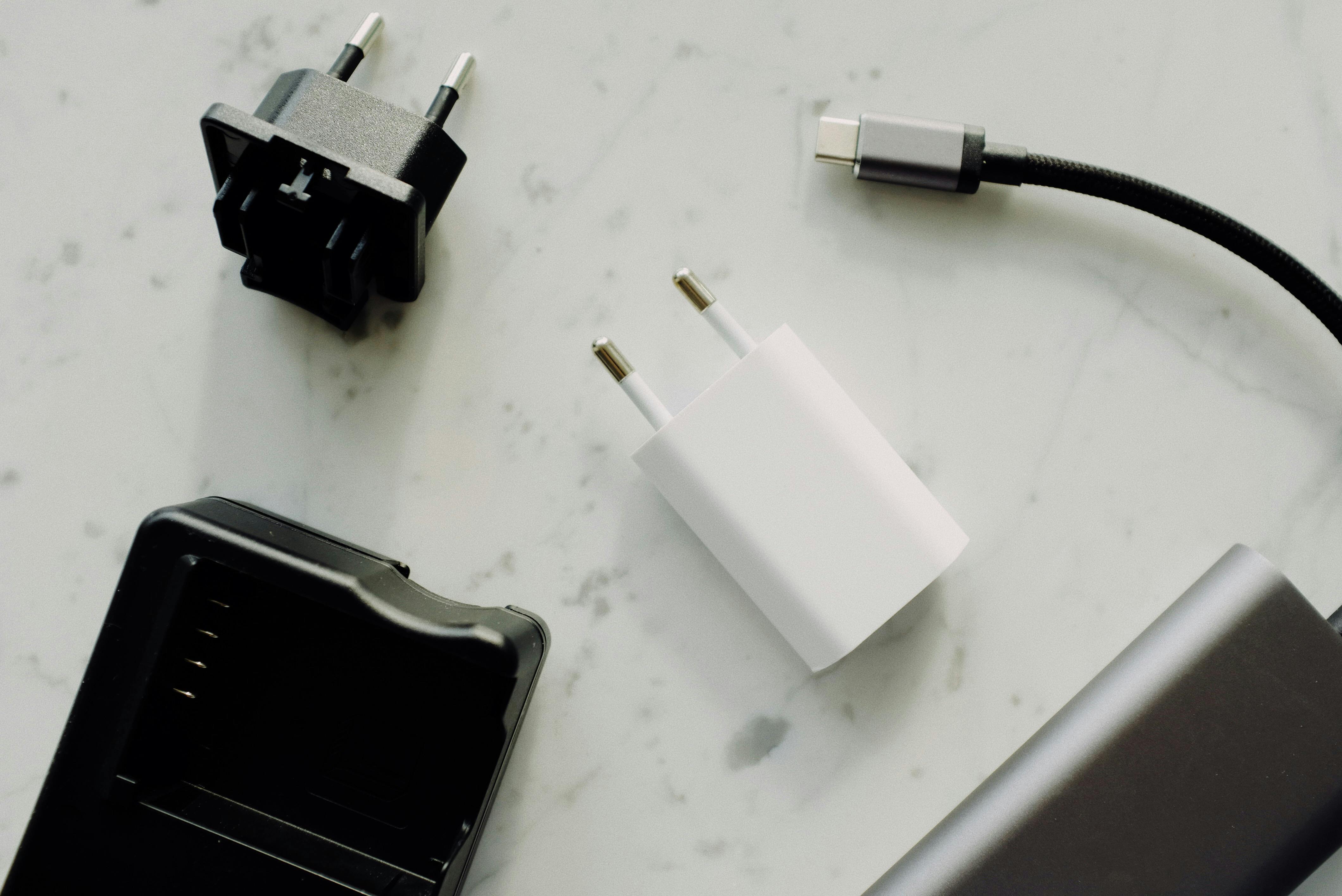
"Fast charging" gets used loosely, but there are really two different things that make a modern charger fast. The first is wattage — how much power the brick can physically push out, whether that's 20W for a phone or 120W+ for a laptop. The second, and the bigger leap of the last few years, is gallium nitride (GaN): a semiconductor material that replaces the silicon used in older chargers. GaN conducts electricity more efficiently and generates far less heat, which lets manufacturers cram far more power into a much smaller, cooler-running brick.
That efficiency is why a charger the size of a matchbox can now output as much power as a brick nearly triple its size a few years ago. Both Anker and Belkin build their current lineups around GaN, paired with smart-negotiation protocols like USB-C Power Delivery (PD) and Programmable Power Supply (PPS) that let the charger sense exactly how much power a connected device needs — and adjust in real time rather than blasting a fixed voltage at everything you plug in.